How to Calculate Body Fat Percentage at Home (No Calipers Needed)
Sanjay Singh
Published on 9 Jul 2026 • Updated on 30 Sept 2026
No caliper in your gym bag, and a DEXA scan costs more than most people want to spend just to check a number? Fair enough. Here's the good news: how to calculate body fat percentage at home doesn't need fancy equipment at all. A regular tape measure and a few specific spots on your body get you a surprisingly reliable estimate — the same method the US Navy has used for decades.
Why Body Fat Percentage Beats the Scale
Weight alone tells you almost nothing about what's actually going on with your body. Two people can weigh exactly the same — say 70 kg (154 lbs) — and look completely different, because one is carrying more muscle and the other more fat.
Body fat percentage tells you what portion of your total weight is fat versus everything else — muscle, bone, water, organs. That's the number that actually reflects fitness progress. You can lose fat and gain muscle at the same time and the scale barely moves, while your body fat percentage drops noticeably. That's why relying on weight alone frustrates so many people mid-journey.
The US Navy Method: What You'll Need
This method was developed by the US Navy to estimate body fat quickly for large groups of recruits, without lab equipment. It's not lab-grade precise, but it's accurate enough for tracking real progress over time — and it costs you nothing but a tape measure.
You'll need:
- A flexible tape measure (the kind used for sewing works fine)
- Your height in cm or inches
- A few minutes and a mirror, ideally
The measurement points differ slightly for men and women, so let's break both down.
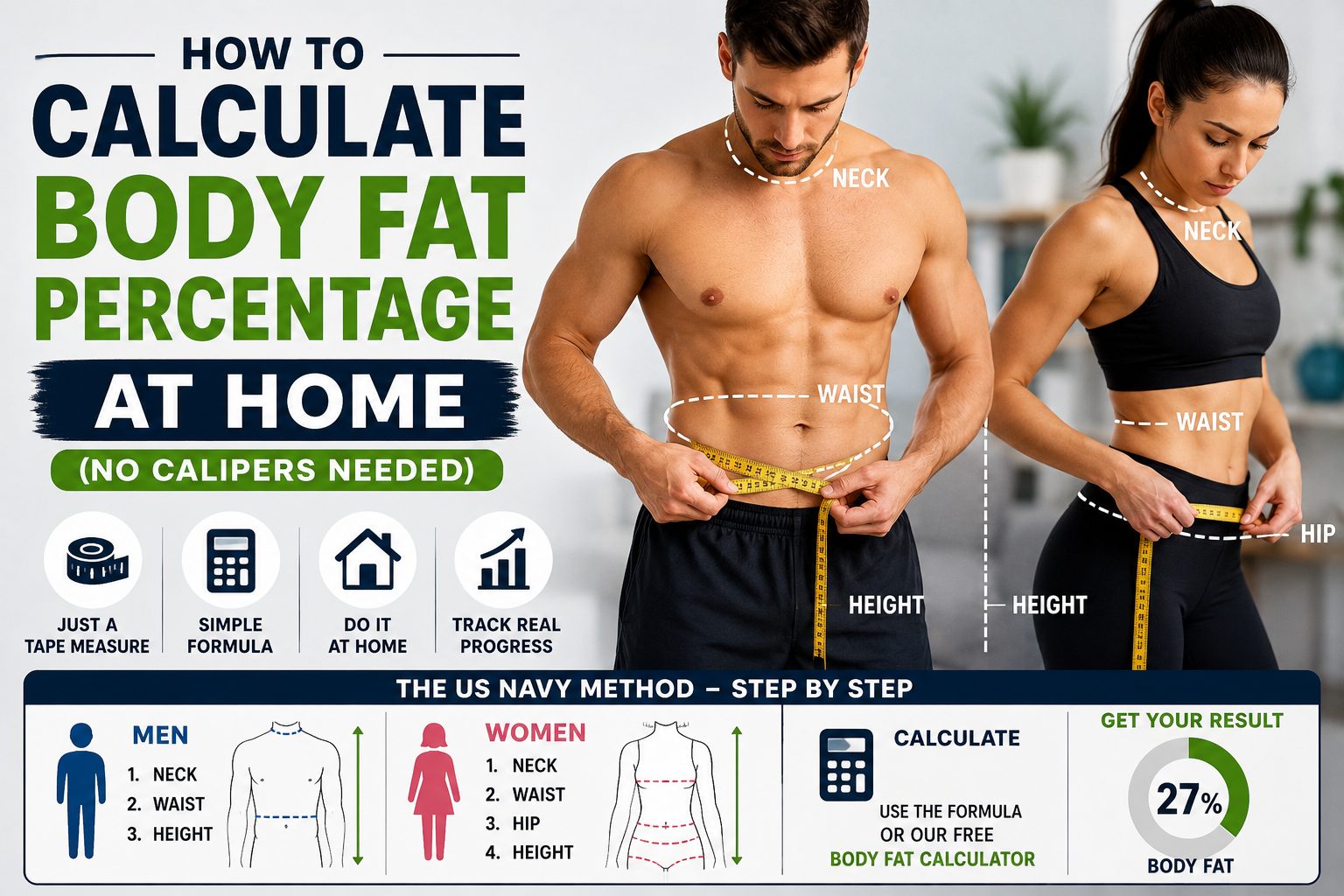
Step-by-Step: Measuring for Men
- Neck — Measure around the base of your neck, just below the Adam's apple. Keep the tape level.
- Waist — Measure at your navel level, not the narrowest point of your torso. Stand relaxed, don't suck in.
- Height — Measure standing straight, without shoes.
Take each measurement in either centimeters or inches — just stay consistent throughout.
Step-by-Step: Measuring for Women
- Neck — Same as above, just below the Adam's apple area.
- Waist — At the narrowest part of your torso, usually just above the belly button.
- Hip — At the widest point around your hips and glutes.
- Height — Standing straight, no shoes.
Women's calculations include the hip measurement because fat distribution patterns differ between men and women, and the Navy formula accounts for that.
The Formula (And a Worked Example)
For men: Body Fat % = 86.010 × log10(waist − neck) − 70.041 × log10(height) + 36.76
For women: Body Fat % = 163.205 × log10(waist + hip − neck) − 97.684 × log10(height) − 78.387
Let's run a real example. A man with a 90 cm waist, 38 cm neck, and 175 cm height:
log10(90 − 38) = log10(52) = 1.716 log10(175) = 2.243
86.010 × 1.716 = 147.6 70.041 × 2.243 = 157.1
147.6 − 157.1 + 36.76 = 27.3% body fat
That puts him in the "acceptable" range for adult men, though a bit on the higher side. Doing this math by hand is doable but tedious — plugging your numbers into the Body Fat Calculator gives you the same result instantly, without the log calculations.
Getting Accurate Measurements (Small Mistakes Skew the Result)
A few things throw this estimate off more than people expect:
- Measuring after a meal. Waist measurements swing several centimeters depending on when you measure. Do it first thing in the morning, consistently.
- Sucking in your stomach. It defeats the entire purpose. Stand naturally.
- Loose tape or wrong tension. The tape should sit snug against skin, not compress it and not hang loose either.
- Inconsistent spots. Measure the same exact spot every time you retest — a couple of centimeters off changes the number meaningfully.
Retest every 2-3 weeks rather than daily. Day-to-day fluctuations from water retention or food volume aren't real changes in body composition.
What Your Number Actually Means
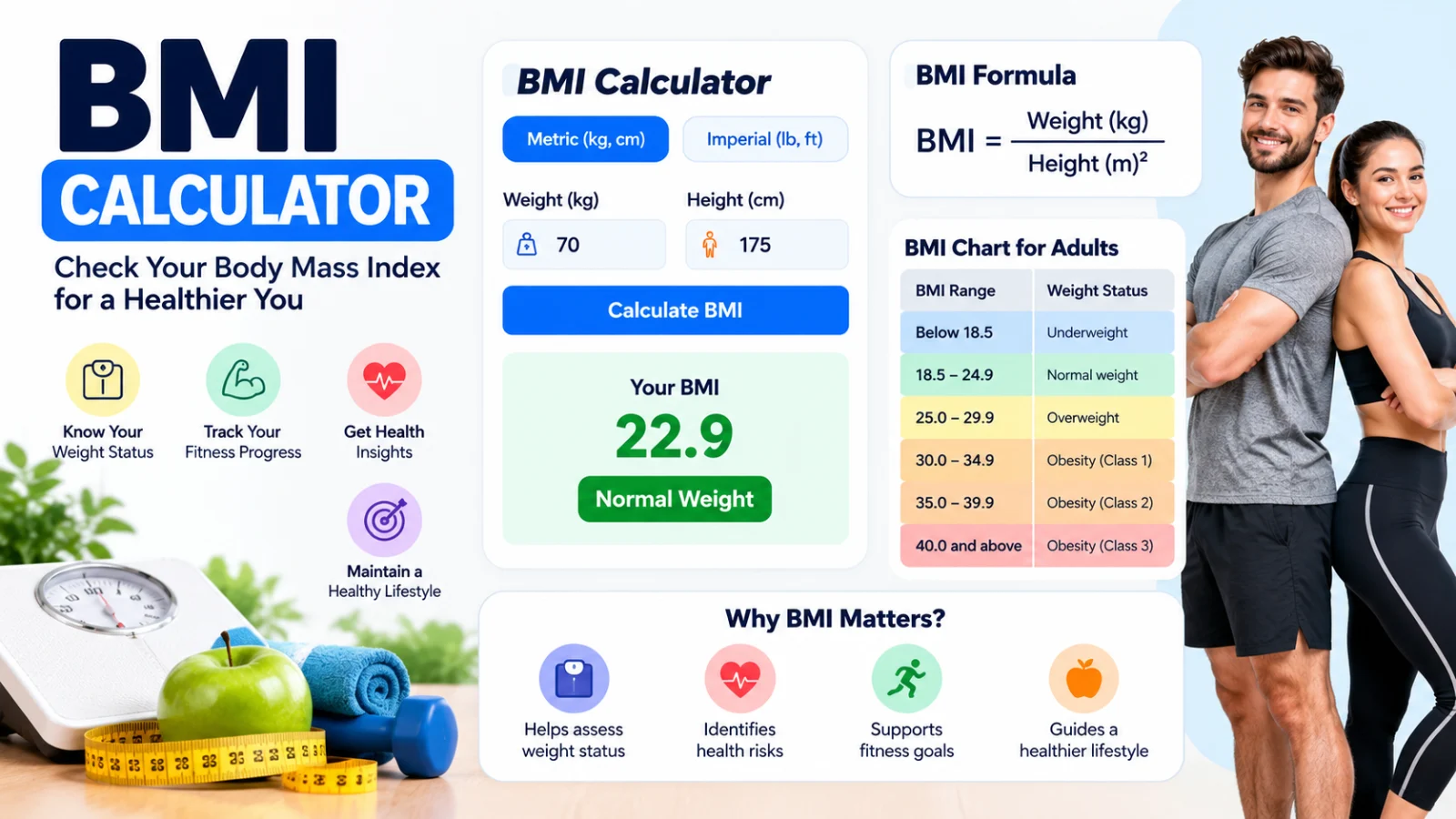
Once you've got your percentage, the BMI Calculator can give you a second data point — though remember, BMI doesn't separate fat from muscle, which is exactly why body fat percentage matters more for people who lift weights or do sports.
If you're trying to figure out what weight range makes sense for your frame alongside your body fat number, the Ideal Weight Calculator is worth checking too. And if fat loss is the actual goal, knowing your BMR Calculator result helps you set calorie targets that won't leave you exhausted or stuck at a plateau.
This method gives an estimate, not a clinical measurement — for precise body composition analysis, consult a healthcare professional or get a DEXA scan.
FAQs
How accurate is the US Navy body fat method? It's generally within 3-4% of DEXA scan results for most people, which makes it reliable enough for tracking trends, though not precise enough for medical diagnosis.
Do I need any special equipment? Just a flexible tape measure. No calipers, scales, or apps required — though a calculator makes the math instant.
Why does the formula differ for men and women? Men and women store fat differently — women typically carry more fat around the hips, so the female formula includes a hip measurement that the male one doesn't.
How often should I re-measure my body fat percentage? Every 2-3 weeks is enough to catch real trends without getting thrown off by daily water weight fluctuations.
Is this method accurate for athletes or bodybuilders? It tends to be less precise at very low body fat percentages, since the formula was designed around average population data rather than extremely lean physiques.
Grab a tape measure, take your measurements first thing tomorrow morning, and run them through the Body Fat Calculator — you'll know exactly where you stand in under two minutes.
Get new calculators & guides by email
Occasional updates when we add a new calculator or publish a useful guide. No spam, unsubscribe anytime.
By subscribing you agree to our Privacy Policy.